Friday, October 29, 2010

Warm Springs Indian Reservation

Juniperus occidentalis at Warm Springs Indian Reservation September 1999

Warm Springs Indian Reservation September 1999

Warm Springs Indian Reservation September 1999

 Juniperus occidentalis at Warm Springs Indian Reservation September 1999

Warm Springs Indian Reservation September 1999

The Warm Springs Indian Reservation covers more than 1,000 square miles in north central Oregon.  The western half of the reservation, on the eastern slopes of the Cascade Mountains, is forest.  The eastern half lies adjacent to the Oregon High Desert Region.  It shares typical high desert vegetation including Western Juniper (Juniperus occidentalis), sagebrush (Artemisia tridentata), Idaho Fescue (Festuca idahoensis), Oregon Sunshine (Eriophyllum lanatum), Sulfur Buckwheat (Eriogonum umbellatum) & Mariposa Lilies (Calochortus species).  On the eastern boundary, at the Deschutes River, annual precipitation is only about 10 inches with annual snowfall of around 15 inches.

In September 1999 I stayed in the dry side of the reservation at Kah-Nee-Ta Lodge.  In addition to fine accommodations, a pool & 2 restaurants, I greatly appreciated the opportunity to hike through the arid lands surrounding the lodge.  The weather was lovely.  The nearby Museum at Warm Springs made an excellent presentation of the traditions of the tribes that share the Warm Springs Indian Reservation: the Wasco, the Warm Springs & the Paiute.  The reservation was established in 1855 through a series treaties between the superintendent for the Oregon Territory (Joel Palmer), & representatives of the Warm Springs & Wasco tribes.  In 1879, the US government moved a small group of Northern Paiutes to the reservation.

 Jordan at Warm Springs Indian Reservation September 1999

Friday, October 22, 2010

Joshua Tree National Park

 Yucca brevifolia (Joshua Tree) in Joshua Tree National Park March 1999

Cylindropuntia bigelovii (Cholla Cactus) at Joshua Tree National Park March 1999

  Cylindropuntia bigelovii (Cholla Cactus) with bird's nest in Joshua Tree National Park March 1999

 Cylindropuntia bigelovii (Cholla Cactus) with grasses in Joshua Tree National Park March 1999

 Juniperus californica (California Juniper) in Joshua Tree National Park March 1999

 Pinus monophylla (Single Leaf Pinyon) in Joshua Tree National Park March 1999

 Joshua Tree National Park March 1999

Joshua Tree National Park is possibly the most intiguing & accessible landscape in California.  It lies not far from Palm Springs, about equidistant from Los Angeles & San Diego.  All 3 cities are common destinations for people from the Pacific Northwest during our rainy winter months, the best time time to visit the park. I have been to Joshua Tree National Park twice.  The 1st time was with my family in June 1971 when I was 12.  The place was then Joshua Tree National Monument.  It was hotter than I had ever imagined hot could be.  We stopped near an oasis ringed with palms (Washingtonia filifera).  The surface of the water was thick with bees.  Along the sweltering trail were grave markers of 19th century migrants who had attempted to cross the desert in wagons on their way to the coast.  I was quite sure they had died of the heat, if the bees hadn't killed them 1st.  I visited Joshua Tree National Park for the 2nd time in March 1999 with friends from Palm Springs.  The weather was perfect then.  I was amazed by the diversity of plant life in the desert, including scrub oak (Quercus john-tuckeri), pine (Pinus monophylla) & juniper (Juniperus californica), in addition to the ubiquitous Joshua Trees (Yucca brevifolia) & Cholla Cactus (Cylindropuntia bigelovii) I remembered from childhood.  The park covers almost 800,000 acres, including portions of both the Mojave Desert & the Colorado Desert.  

 Jordan at Joshua Tree National Park March 1999

Friday, October 15, 2010

The Mediterranean Garden at Kew Gardens

The Mediterranean Garden at Kew Gardens July 2009

Cistus in the Mediterranean Garden at Kew Gardens July 2009

Fremontodendron in the Mediterranean Garden at Kew Gardens July 2009

Genista in the Mediterranean Garden at Kew Gardens July 2009

Phlomis in the Mediterranean Garden at Kew Gardens July 2009

King William's Temple in the Mediterranean Garden at Kew Gardens July 2009

The Mediterranean Garden was definitely the high point of my visit to Royal Botanical Gardens, Kew in London in July of 2009.  It is truly a stunning garden.  The placement of the garden around, but mostly in front of King William's Temple, is superb.  The planting greatly enhances the structure.  It appears to be an abandoned edifice of ancient Rome in the midst of a Mediterranean wilderness.  The architecture of the portico is of the Tuscan Order, a simplified version of the Doric Order, columns with base, unfluted shaft & simply molded capital, plain entablature.  It was built in 1837.

The planting design is quite informal.  While there are many plants native to the Mediterranean Basin, contrary to the information at the Kew Gardens website, it does not 'depict a typical Mediterranean natural habitat.'  There are many plants here that are native to the Americas, including Fremontodendron californicum (California Flannel Bush) New World fan palms & Yucca.  But this mixture is common in Mediterranean gardens around the world.  Agave is often seen in Italian gardens.  For more information on Mediterranean plants, read The Mediterranean Garden. 

'Kew’s aim in creating the feature was to highlight the economic uses of many endemic Mediterranean plants, the diversity of life the habitat supports and the conservation efforts needed to ensure its survival. Stone pines (Pinus pinea) Tuscan olive trees (Olea europaea) and the green spires of Italian cypress (Cypress sempervirens) grow above shrubs such as Cistus and lavender (Lavandula lanata). Information boards explain the uses of some of the most economically important plants,' from the Kew Gardens website.

Friday, October 8, 2010

The Mediterranean Garden

Helleborus lividus April 2010 in the Cascadia Garden

Hypericum cerastoides May 2009 in the Cascadia Garden

Erica australis 'Holehird' February 2009 in the Cascadia Garden

Myrtus communis August 2010 at the Good Shepherd Center

Rosmarinus officinalis April 2010 in Seattle

Cupressus sempervirens March 2010 in Seattle

Sedum hispanicum September 2010 in the Cascadia Garden

The terms Mediterranean garden & Mediterranean plants can be somewhat confusing.  Many Mediterranean gardens include xeric plants from other regions of the world with Mediterranean climates.  Mediterranean gardens are sometimes defined by a formal, geometric style with generous use of stone, but usually with xeric plants.  Such gardens are also called Italian gardens, especially when they include many sculptures & few plants, believed by some to be the epitome of good taste. 

The Mediterranean climate is warm & dry, with winter rainfall & summer drought.  Such a climate exists in coastal regions of central Chile, central & southern California, southwestern Australia & the Western Cape Province of South Africa.  The plant communities in these places are known as maquis (or macchia) in Mediterranean Europe, matorral in Chile, chaparral in California, kwongan in Australia & fynbos in South Africa.

This Mediterranean garden is composed entirely of xeric plants native to the lands that border the Mediterranean Sea in Europe, Asia & Africa.  Plants that have a wide distribution beyond the Mediterranean Basin are excluded.  Design this garden in any way you like, exuberant or restrained, formal or informal.  Make this garden on ground that slopes to the south or west in Seattle.  It must be well-drained & exposed to maximum sun.  This garden will require little or no irrigation beyond the 1st summer.   

Mediterranean Garden Plant List
Trees
Arbutus unedo (Strawberry Tree)
Cedrus atlantica (Atlas Cedar) Cedrus libani (Cedar of Lebanon)
Cupressus sempervirens (Italian Cypress)
Laurus nobilis (Sweet Bay)
Pinus halepensis (Aleppo Pine) Pinus nigra (European Black Pine) Pinus pinaster (Maritime Pine) Pinus pinea (Italian Stone Pine)
Pyrus amygdaliformis (Almond Leaved Pear)
Querqus ilex (Holly Oak) Querqus suber (Cork Oak)

Shrubs
Cistus albidus (White Leaved Rockrose) Cistus clusii, Cistus crispus, Cistus incanus (Soft Hairy Rockrose) Cistus ladanifer (Gum Rockrose) Cistus monspeliensis (Montpelier Rockrose) Cistus salviifolius (Sage Leaved Rockrose)
Dorycnium hirsutum (Canary Clover)
Erica arborea (Tree Heath) Erica australis (Spanish Heath) Erica manipuliflora
Juniperus oxycedrus (Spanish Cedar) Juniperus phoenicea (Phoenicean Juniper)
Lavandula angustifolia (English Lavender, though not native there) Lavandula dentata (French Lavender) Lavandula stoechas (Spanish Lavender)
Myrtus communis (Common Myrtle)
Phlomis fruticosa (Jerusalem Sage) Phlomis italica: the epithet italica was given by Linnaeus as it had arrived from or via Italy, but the plant only grows in the Balearic islands. 

Perennials
Achillea tomentosa (Woolly Yarrow)
Allium moly (Golden Garlic) Allium neapolitanum (Naples Onion)
Antirrhinum 'Dulcinea's Heart', Antirrhinum majus (Common Snapdragon) Antirrhinum sempervirens, most species are perennial, of the 17 species, 16 are found in Spain.
Centranthus ruber (Jupiter's Beard)
Digitalis dubia (Dwarf Spanish Foxglove) Digitalis thapsii, Digitalis obscura (Sunset Foxglove)
Eryngium amethystinum (Amethyst Sea Holly) Eryngium bourgatii (Mediterranean Sea Holly) Eryngium variifolium (Moroccan Sea Holly)
Euphorbia characias (Mediterranean Spurge)
Galanthus ikariae (Green Snowdrop)
Helleborus argutifolius (Corsican Hellebore) Helleborus lividus (Majorcan Hellebore)
Helictotrichon sempervirens (Blue Oat Grass)
Iris filifolia, Iris lusitanica (Yellow Spanish Iris) Iris tingitana (Moroccan Iris) Iris xiphium (Spanish Iris) all closely related, these were used to create Dutch Iris.
Narcissus bulbocodium (Hoop Petticoats)
Paeonia clusii (Cretan White Peony) Paeonia corsica (aka P cambessedesii, Corsican Peony) Paeonia peregrina (Balkan Peony)
Scilla peruviana (Portuguese Squill) the scientific name peruviana results from confusion over the origin of the specimens from which the species was described by Linnaeus, who received specimens imported from Spain aboard a ship named Peru, & was misled into thinking the specimens had come from that country.
Salvia argentea (Silver Sage)
Stipa gigantea (Giant Feather Grass)

Groundcovers
Cerastium tomentosum (Snow in Summer)

Friday, September 24, 2010

Hebe in the Cascadia Garden

Hebe recurva & Daboecia cantabrica 'Rainbow' July 2010
 
Hebe anomala September 2010

Hebe cupressoides September 2010 

 
Hebe glaucophylla September 2010 

Hebe ochracea September 2010 

Hebe x pimeleoides 'Quicksilver' & Calluna vulgaris 'Wickwar Flame' September 2010 

Hebe salicifolia September 2010

Hebe is 1 of my favorite genera, an extremely useful group of shrubs for gardens in Seattle, the coastal Pacific Northwest & northern California.  There are 90 to 100 species of Hebe, all but 1 native to New Zealand.  There are numerous hybrids & cultivars.  Hebe are mostly small shrubs, some low & sprawling.  Some have very lovely flowers, but foliage is the main attraction for most Hebe.  Foliage comes in a range of green & gray, with some red & purple.  Hebe grow quickly, which make them very useful for filling open spaces.  Many Hebe become leggy, which some people find unattractive.  I find this trait an opportunity to weave Hebe together with other open, low-growing shrubs such as Calluna, Cassinia, Daboecia & Olearia.  In my garden I combine Hebe x pimeleoides 'Quicksilver' with Calluna vulgaris 'Wickwar Flame'.  This makes a very eye-catching display of gray & yellow foliage.  It never fails to impress garden visitors.  I appropriated the idea from a garden I once visited & have spread it on to others.  I combine Hebe recurva with Daboecia cantabrica 'Rainbow' & Hebe anomala with Cassinia leptophylla.  Hebe was the ancient Greek goddess of youth.  Homer referred to her as, 'Hebe of the slender ankles.'  These slender ankles (Hebe seldom grow a stout trunk) allow other plants to rub against them like a swarm of friendly cats.  Hebe buxifolia & Hebe topiaria have dense branching patterns that make them useful replacements for Buxus sempervirens & Ilex crenata.  Hebe cupressoides  & Hebe ochracea are known as whipcord Hebe.  They grow in alpine regions of New Zealand.  Many of the other Hebe used in Seattle are sub-alpine in nature.

List of Hebe in the Cascadia Garden
Hebe anomala (removed due to extensive damage 2010)
Hebe ochracea
Hebe x pimeleoides
Hebe x pimeleoides ‘Quicksilver’
Hebe pinguifolia ‘Pagei’
Hebe recurva  (some damage 2010)
Hebe ‘Red Edge’
Hebe salicifolia  (badly damaged 2010)

Update: In November 2010 there was a hard frost.  Temperatures had been unusually warm, with a high of 56F/13.3C on 11/16, until they dropped to 31F/-0.5C on 11/21, 22F/-5.5C on 11/22, 16F/-8.8C on 11/23, 14F/-10C on 11/24, 28F/-2.2C on 11/25.  Then temperatures were above freezing.  This damaged or killed many plants.  Hebe anomala & Cassinia leptophylla were so badly damaged that I removed them.  Hebe salicifolia was also badly damaged.  Much of the damage didn't show until later in the year, as many branches continued to die.  Hebe recurva had some damage, but recovered well that year.  The rest had no damage at all.  I saw some damage to Hebe topiaria in other gardens.

Friday, September 17, 2010

The Brian O Mulligan Sorbus Collection

Sorbus anglica September 2010
 
Sorbus aria 'Salicifolia' September 2010

Sorbus bristoliensis May 2010

Sorbus cashmiriana May 2010

Sorbus forrestii September 2010

Sorbus forrestii May 2010

Sorbus gonggashanica September 2010

The Brian O Mulligan Sorbus Collection can be found at the Washington Park Arboretum in Seattle.  This collection is the most complete in North America, containing 77 different taxa (species, forms, hybrids & cultivars) divided into sections for simple-leaved & compound-leaved forms.  The collection was named in honor of Brian O Mulligan, Director of the Washington Park Arboretum from 1947 to 1972.  His interest in Sorbus guided the renovation & redesign of the collection.  According to Mulligan, writing for the Spring 1990 edition of the Washington Park Arboretum Bulletin, the 1st plantings of Sorbus were made in 1949 & 1950.  As of 1990, when the collection was renovated, there were 50 taxa.  Most of those were raised from seeds received from many arboreta & botanical gardens, mainly in Europe.  27 new taxa have been added since 1990, including several important Chinese species. 

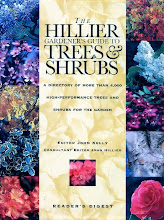
Sorbus is a genus of 100 to 200 species of trees & shrubs in the family Rosaceae.  Sorbus species are commonly known as whitebeam (simple-leaved forms) & mountain ash (compound-leaved forms).  Sorbus aucuparia (rowan) is the most common species of mountain ash found in the Seattle area.  Unfortunately, it has become a weed that has given the genus a bad reputation.  Among the 100+ species are many that make excellent garden trees.  The City of Seattle approves Sorbus aucuparia 'Michred' & Sorbus x hybrida as street trees.  The Sunset Western Garden Book calls Sorbus, 'good small garden trees.'  The Hillier Gardener's Guide to Trees & Shrubs says, 'Sorbus is one genus that provides ornamental features throughout the year & does so without needing much care.'

Among the most beautiful & often-used species are Sorbus aria, Sorbus cashmiriana, Sorbus commixta & Sorbus hupehensis.  I believe Sorbus scalaris has the most beautiful flowers.  In my own garden are Sorbus 'Birgitta', Sorbus forrestii & Sorbus gonggashanica.  I have raised seedlings taken from Sorbus hupehensis & Sorbus rehderiana in the Brian O Mulligan Sorbus Collection.  But of course, with so many other species nearby, those are likely to be hybrids.  A blog devoted solely to Sorbus is Rowans, Whitebeams and Service Trees written by Dr Patrick Roper.

List of plants & their number in the Brian O Mulligan Sorbus Collection
Sorbus alnifolia  2
Sorbus anglica  2
Sorbus americana  2
Sorbus amurensis  1
Sorbus aria  2
Sorbus aria f. longifolia  2
Sorbus aria 'Lutescens' 1
Sorbus aria 'Salicifolia' 1
Sorbus aucuparia 1
Sorbus aucuparia 'Cardinal Royal'  1
Sorbus austriaca  2
Sorbus 'Birgitta'  2
Sorbus bristoliensis  1
Sorbus caloneura  2
Sorbus cashmiriana  3
Sorbus commixta  12
Sorbus commixta 'Embley'  1
Sorbus dacica  3
Sorbus decora  1
Sorbus devoniensis  3
Sorbus discolor 'Apricot Queen'  1
Sorbus domestica  3
Sorbus esserteauiana  1
Sorbus filipes  5
Sorbus folgneri x Sorbus alnifolia  1
Sorbus forrestii  3
Sorbus gracilis  1
Sorbus gonggashanica  1
Sorbus helenae 1
Sorbus himalaica  1
Sorbus x hostii  2
Sorbus hupehensis  2
Sorbus x hybrida  2
Sorbus x intermedia  1
Sorbus japonica  1
Sorbus javorkae  1
Sorbus koehneana  3
Sorbus kusnetzovii  1
Sorbus lanata  2
Sorbus latifolia  2
Sorbus megalocarpa  1
Sorbus x meinichii  1
Sorbus meliosmifolia  1
Sorbus microphylla  3
Sorbus minima  2
Sorbus mougeotii  1
Sorbus pallescens  3
Sorbus prattii  1
Sorbus pogonopetala  1
Sorbus porrigentiformis  1
Sorbus poteriifolia  1
Sorbus pygmaea  1
Sorbus randaiensis  1
Sorbus redliana  1
Sorbus reducta  1
Sorbus rehderiana     1
Sorbus rehderiana form     1
Sorbus rehderiana 'Joseph Rock'  1
Sorbus aff. rehderiana  3
Sorbus sargentiana  4
Sorbus scalaris  3
Sorbus scalaris hybrid  1
Sorbus scopulina var. cascadensis  5
Sorbus x splendida  1
Sorbus subcuneata  1
Sorbus subsimilis  1
Sorbus tamamschjanae  1
Sorbus thibetica  1
Sorbus x thuringiaca 'Fastigiata'  1
Sorbus torminalis  1
Sorbus turkestanica  1
Sorbus umbellata  1
Sorbus umbellata var. cretica  3
Sorbus ursina  2
Sorbus vestita  1
Sorbus 'Wilfrid Fox'  3
Sorbus zahlbruckneri

Friday, September 10, 2010

Cougar Mountain: Overgrowth & Understory

Cougar Mountain Regional Wildland Park covers 3,100 acres between between 1,000 and 1,595 feet above sea level near Issaquah.  It is the largest of the King County Parks, 6 times the size of Discovery Park, the largest park in the City of Seattle.  Cougar Mountain Regional Wildland Park is connected to Squak Mountain State Park by the Cougar-Squak Corridor.  Together they cover an area of 5,000 acres.  The park is mostly forested, but also contains significant wetlands.  Overgrowth & Understory is a temporary outdoor sculpture exhibition at Cougar Mountain Regional Wildland Park, which runs from July 10th through October 2nd, 2010.  16 artworks near the Sky Country and Anti-Aircraft Peak trailheads explore themes of art, nature, and land use.  This is collaboration between King County Parks and the Center on Contemporary Art.

Cougar Mountain Regional Wildland Park August 2010.  Burnt Offering by Debra Harvey.  ‘Burnt Offering begins with the charred stump of a once large sheltering tree. Forged copper, rusty metal, rebar, semi-precious stones & glass mosaic combine to become part of the rebirth...the creation of the understory.’  Overgrowth & Understory

Cougar Mountain Regional Wildland Park August 2010.  Retablo by Aaron Haba.  ‘Retablo is a response to the abandoned infrastructure on Anti-Aircraft Peak.  Drawing from the history of the site's use to deploy Nike missiles, I chose to work with simple geometric shapes.  These refer to boundaries, both physical & spiritual, & how over time these boundaries change, or in the case of the site become obsolete.  Through the use of ashes, flowers & chalk I hope to explore the need for boundariess & how we can dismantle those that keep us from seeing the world as a whole.’   Overgrowth & Understory

Cougar Mountain Regional Wildland Park August 2010.  Mushroom growing along Anti-Aircraft Ridge Trail.

Cougar Mountain Regional Wildland Park August 2010.  Alder (Alnus rubra) forest on Anti-Aircraft Ridge.

Cougar Mountain Regional Wildland Park August 2010.  Que Viva El Sol / La Vida Del Sol by Miguel Edwards.  ‘The sun is massive...but also gaseous.  With this piece, I hoped to capture the essence of the duality with bold structure & geometry, as well as gesture & negative space.’  Overgrowth & Understory

Friday, August 27, 2010

Good Shepherd Center

Good Shepherd Center August 2010

Good Shepherd P-Patch August 2010 Dahlia

 Good Shepherd P-Patch August 2010

Good Shepherd P-Patch August 2010 Clematis 'Jackmanii'

Good Shepherd P-Patch August 2010

Seattle Tilth Demonstration Garden August 2010 Echinacea purpurea

There is a lot to see at the Good Shepherd Center in the Wallingford neighborhood of Seattle.  The impressive 1906 building is filled with the offices of nonprofit organizations, a few live/work units for artists & 2 schools.  The most notable nonprofit for gardeners is Seattle Tilth.  Seattle Tilth maintains an interesting demonstration garden which is 1 of many gardens that surround the Good Shepherd Center.  The Good Shepherd P-Patch can be found here, as well as Meridian Playground, with 6.5 acres of fields & orchard, a gazebo & a large picnic shelter.  Be sure to walk all the way around the main building to see all of the gardens & landscaping.  In August of 2010, the place was filled with flowers.