Friday, March 15, 2013

Seike Japanese Garden

Seike Japanese Garden March 2011

Seike Japanese Garden March 2011

Seike Japanese Garden March 2011

Seike Japanese Garden March 2011

Seike Japanese Garden March 2011

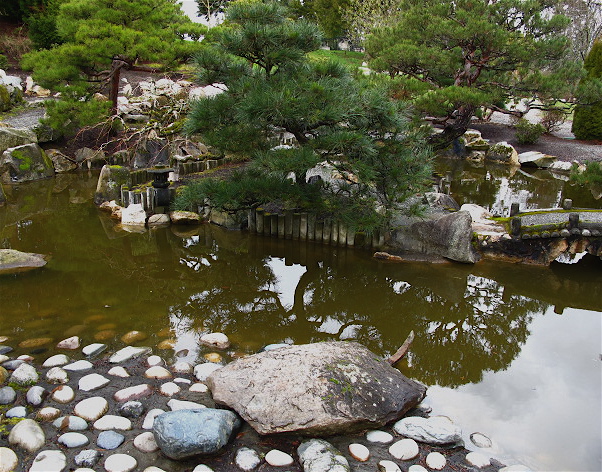
The Seike Japanese Garden can be found at the Highline SeaTac Botanical Garden in the City of SeaTac, south of Seattle in King County.  The garden was relocated to the Highline SeaTac Botanical Garden from the former site of the Des Moines Way Nursery in the City of SeaTac & opened in June 2006. The garden would have been abandoned due to the expansion of SeaTac Airport. The project is believed to be the largest relocation of a Japanese Garden ever attempted in the United States. The Seike family built the garden as a memorial to Toll Seike who was killed in action during WWII in France.  Construction was spurred by Seattle's 1962 World's Fair. The family hired Shintaro Okada, a garden designer from Hiroshima, to assist with planning & construction. Mr. Okada arrived in December of 1960 & construction started in January of 1961. The $350,000 relocation effort focused on recreating the stonework, pond & built elements such as bridges and lanterns, saving only the most significant plants.  The ultimate goal remained a faithful recreation of designer Shintaro Okada's intent & the preservation of a significant local horticultural, cultural & historical amenity.  This is a pleasant, small-scale Japanese garden.

Friday, March 8, 2013

February in Seattle

Kubota Garden February 2013

Garrya issaquahensis (silk-tassel) at the Washington Park Arboretum February 2013

Hamamelis x intermedia (witch-hazel) at High Point February 2013

Pseudotsuga menziesii (Douglas fir) in Mt Baker February 2013

February 2013 in Seattle was warmer & much drier than normal. The mean temperature was 44.4F/6.9C. The normal mean temperature is 43.4F/6.3C. The highest temperature was 56F/13.3C, the lowest 34F/1.1C.   Total precipitation was 1.58 inches.  Normal precipitation is 3.5 inches. There were 2 days with rain, 23 days with light rain, 15 days with fog (4 of them with visibility at less than 1/4 mile) 4 days with haze, 23 cloudy days, 5 partly cloudy days & no fair days. However, there were many brief periods of sun.

Crocus, Hepatica (liverwort) miniature Narcissus & Primula (primrose) began to bloom.  Because many of the lightly rainy days had only occasional showers & the temperatures were not very cold, I was able to finish cutting dead branches & perennial stalks, & raking up leaves. My house in Mt Baker went back on the market on February 25 & had 2 offers to buy.  Meanwhile, digging began for the foundation of the new house at Rainier Vista in the Rainier Valley, slightly less than a mile away.

Friday, March 1, 2013

High Point Commons Park P-Patch

High Point Commons Park P-Patch February 2013

The shed at the High Point Commons Park P-Patch February 2013

High Point Commons Park P-Patch February 2013

High Point Commons Park P-Patch February 2013

High Point Commons Park P-Patch February 2013

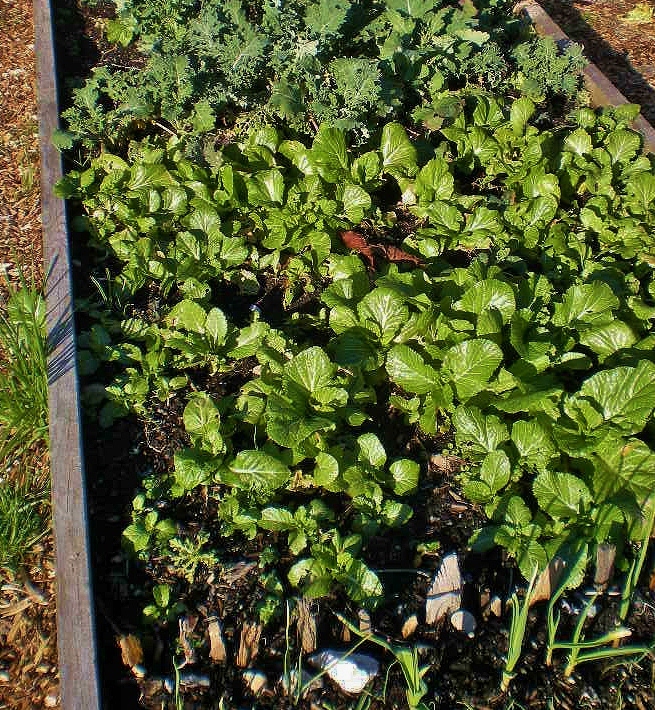
The High Point Commons Park P-Patch is located in the High Point development at SW Graham Street & 32nd Avenue SW.  It is a small & fairly new community garden.  High Point redevelopment began in 2006. High Point Commons Park is the largest open space in the development.  The p-patch is located at the north end along SW Graham Street.  Unlike the other p-patches I have visited, there is no information about it at the Seattle Department of Neighborhoods website, although it is listed as a public housing site with priority given to residents.  A young woman walking her dog nearby told me that I should see the p-patch during the summer. She described its bounty.  I said it looked good in winter.  She said she & her mother had a plot there.  High Point is a mixed-income community with approximately 1,600 housing units, about half of them low-income rentals owned by the Seattle Housing Authority. The other half are single family homes, condominiums & town homes sold to private owners.  As of February 2013, private homes are still being built.   

Friday, February 22, 2013

Jardim Botânico da Universidade de Lisboa

Jardim Botânico da Universidade de Lisboa 2012 março

Rondeletia amoena, Jardim Botânico da Universidade de Lisboa 2012 março

Jardim Botânico da Universidade de Lisboa 2012 março

Senecio petasites, Eucalyptus, Jardim Botânico da Universidade de Lisboa 2012 março

Dracaena draco, Jardim Botânico da Universidade de Lisboa 2012 março 

Click here for more photos of the Jardim Botânico da Universidade de Lisboa. 

The Jardim Botânico da Universidade de Lisboa is a scientific garden that was designed in the mid-19th century to complement botanical teaching and research. Planting was begun in 1873. An enormous diversity of plants were collected by its first gardeners from Portuguese colonies around the world. Most of the garden flows down a hillside with walks, stairs, terraces, ponds & flowing water. It's a bit of a wonderland, a green oasis in the heart of Lisbon, lush & thick with plants, hidden within the busy city near the Avenida Metro Station. The present garden has species from New Zealand, Australia, China, Japan and South America which flourish in the mild Lisbon climate. Many of the plants are quite mature. There are huge Eucalyptus & palm trees, as well as succulents, bromeliads, many Cycads & Mediterranean Fan Palms (Chamaerops humilis) & flowering shrubs I had never seen before.

Friday, February 15, 2013

High Point Natural Drainage System

High Point Natural Drainage System February 2013. Storm water is stored in this large, permanent pond before it empties into Longfellow Creek.

High Point Natural Drainage System February 2013. A cut in the curb allows water from the street to flow into a swale.

High Point Natural Drainage System February 2013. Nearly all the parking strips at High Point have been built as swales.

High Point Natural Drainage System February 2013. A small temporary retention pond.

High Point Natural Drainage System February 2013. A drain at the bottom of a swale.

Because of its size & relationship to Longfellow Creek, the redevelopment of High Point in West Seattle offered Seattle Public Utilities an opportunity to contruct a large natural drainage system, the largest built by the City of Seattle & the first natural drainage system of this scale used in a high-density Seattle neighborhood. Designed in partnership with the Seattle Housing Authority, the system treats about 10 percent of the watershed feeding Longfellow Creek, which flows into the Duwamish River, then Puget Sound. The natural drainage system mimics nature by using swales to capture & naturally filter storm water. Landscaped ponds hold the overflow. All 34 blocks of the High Point community are part of this system. In addition, porous surfaces make up a significant part of the sidewalks & parking spaces. 

High Point was originally developed during World War II to provide government housing. It remained a district of predominantly low-income housing through the 1990s. In 2003, the Seattle Housing Authority began work on the first phase of a 6-year project to redevelop High Point into a mixed-income community. All existing housing, roads & utilities were replaced. High Point now has approximately 1,600 housing units, about half of them low-income rentals owned by the Seattle Housing Authority. The other half are single family homes, condominiums & town homes sold to private owners. 

The need to improve the water quality of Longfellow Creek drove the plan to connect High Point with the surrounding environment. The City of Seattle is required by the US Environmental Protection Agency to dramatically cut sewage overflows by 2025. Natural drainage systems are an effective method for curbing storm water, which can trigger overflows of raw sewage. The swales & temporary retention ponds (also known as rain gardens) are planted with red-twig dogwood, evergreen huckleberry, sword fern, grasses, sedges & other plants. Rainwater soaks into the ground rather than flowing into the (unfortunately combined) storm water & sewer system. Oil, pesticides & other pollutants are filtered out to decompose & be consumed by micro-organisms in the soil.  Not long after a heavy rainfall, swales & shallow ponds are mostly empty of water.  Before flowing on to Longfellow Creek, water is stored in a large pond, often used by migratory waterfowl, located at the lower edge of the development. Following the path of the water through High Point is a pleasant & interesting walk.

Friday, February 8, 2013

January in Seattle

Lincoln Park January 2013

Kerry Park January 2013

Thuja plicata on Queen Anne Hill January 2013

Seattle Center January 2013

Liquidambar styraciflua in Wedgwood January 2013

January 2013 in Seattle was significantly colder & drier than normal.  The mean temperature was 38.2F/3.44C.  The normal mean temperature is 42F/5.55C.  The highest temperature was 53F/11.66C on 1/8, the lowest was 24F/-4.44C on 1/13.  Total precipitation was 4.16 inches.  Normal precipitation is 5.57 inches.  There was 1 day with heavy rain, 2 days with rain, 17 days with light rain, 1 day with light snow, 25 days with fog, 11 days of fog with visibility at less than 1/4 mile, 4 days with haze, 23 cloudy days, 5 partly cloudy days & 3 fair days.      

It was very unusual that no rain fell for 12 days between 1/11 & 1/22.  It was fairly cold, with highs mostly below 40F/4.44C & lows below freezing every night.  But even without rain, it was very moist.  The ground remained wet, with frost every morning & thin ice in places.  6 consecutive days of fog came at the end of this period, sometimes quite heavy & lingering throughout the day.  The weather returned to normal on 1/23 with rain & temperatures well above freezing.  The fog was beautiful, yet oddly inhibiting.  I did not go out walking, or work in the garden.

Friday, January 25, 2013

Jardim Botânico da Universidade de Coimbra

Jardim Botânico da Universidade de Coimbra 2012 março

Jardim Botânico da Universidade de Coimbra 2012 março 

Jardim Botânico da Universidade de Coimbra 2012 março

Jardim Botânico da Universidade de Coimbra 2012 março 

Jardim Botânico da Universidade de Coimbra 2012 março

Clique aqui para ver mais fotos da Jardim Botânico da Universidade de Coimbra.


O Jardim Botânico da Universidade de Coimbra, localizado no coração da cidade de Coimbra desde 1772, por iniciativa do Marquês de Pombal, estende-se por 13 ha em terrenos que na sua maior parte foram doados pelos frades Beneditinos.

Os jardins botânicos surgem na Europa como consequência da expansão europeia do século XV. O contacto com plantas e animais exóticos despertou o interesse pelo seu estudo. Exemplo disso foi o português Garcia da Orta que no século XVI viajou para a Índia e se dedicou ao estudo das propriedades terapêuticas das plantas, publicando dois importantes ensaios.

O século XVIII é marcado por uma revolução de mentalidades e por grandes avanços na ciência, nomeadamente no campo da Medicina. Assim, o Jardim Botânico de Coimbra foi criado com o objectivo de complementar o estudo da História Natural e da Medicina. Tendo tido como primeiro responsável Domingos Vandelli destaca-se, a partir de 1791, o papel desempenhado pelo naturalista e botânico Avelar Brotero com várias publicações científicas, entre as quais a primeira Flora Lusitana (1804). Este investigador português deu início à primeira escola prática de Botânica. 

A criação do banco de sementes e respectiva publicação do Index Seminum (catálogo de sementes) em 1868, até hoje anualmente actualizado, incluiu variedades exóticas e portuguesas muito diversificadas. Este facto permite-nos hoje salvaguardar espécies que se encontram em risco de extinção no seu habitat natural. O jardim ganhou assim novas funções no âmbito da conservação da natureza.

No domínio educativo, o Jardim Botânico de Coimbra promove programas de educação ambiental e cultural, sensibilizando os cidadãos para questões ligadas às temáticas ambientais e à adopção de comportamentos cívicos.

O Jardim é também um espaço de tranquilidade, repleto de recantos que nos convidam simplesmente a um passeio.

Friday, January 18, 2013

Lake Union Park

 Lake Union Park, Museum of History & Industry January 2013

Lake Union Park, Museum of History & Industry January 2013
Lake Union January 2013

Lake Union Park, Center for Wooden Boats (Boat Shop) January 2013

Lake Union Park, The Center for Wooden Boats January 2013

Lake Union Park, The Center for Wooden Boats January 2013

Lake Union Park is a unique urban gem, close to the center of downtown Seattle. The park provides access to green space & the lake.  It celebrates the cultural, maritime & industrial heritage of the city. The site’s role as a park became possible on July 1, 2000, when the US Navy conveyed the deed to its five acres of land to Seattle Parks & Recreation. The transfer consolidated the South Lake Union site into a 12-acre park. The new park opened on September 25, 2010.

The Museum of History and Industry is dedicated to preserving, sharing & teaching the diverse history of Seattle & the Puget Sound region. The MOHAI, as it is commonly known in Seattle, has collected & made public important artifacts, documents & photographs from the Puget Sound region since 1911.  The museum moved to the old Naval Reserve Building at Lake Union Park in 2012 & opened in December.  It is free on the 1st Thursday of every month.

At The Center for Wooden Boats you can explore boats on & off the water. Admission is free & free public boat rides are offered on Sundays. This is a living museum. The exhibits are historic wooden boats you can take rowing or sailing. The collection varies throughout the year as boats are restored in the boat shop & new vessels are added. Row boats are available for rental with no prior experience. Sail boats require a check out process to assure safety.

Friday, January 11, 2013

December in Seattle

Hamamelis (Witch Hazel) on Capitol Hill December 2012

Rosa rugosa in Columbia City December 2012

 
Sequoia sempervirens (Coast Redwood) at Franklin High School December 2012

South Seattle Community College Arboretum December 2012

Viburnum x bodnantense at York Park December 2012

December 2012 in Seattle was warmer & wetter than normal.  The mean temperature was 41.5F/5.27C.  The normal mean temperature is 40.6F/4.77C.  The highest temperature was 56F/13.33C, the lowest 29F/-1.66C.  Total precipitation was 6.85 inches.  Normal precipitation is 5.35 inches.  Snowfall was 0.6 inches.  Normal snowfall is 1.7 inches.  There was 1 day with heavy rain, 11 days with rain, 27 days with light rain, 2 days with snow, 2 days with light snow, 25 days with fog, 2 days with haze, 27 cloudy days, 4 partly cloudy days & no fair days.  I did very little work in the garden because of the continuous wetness.

Friday, January 4, 2013

Portland Japanese Garden

Portland Japanese Garden December 2012

Portland Japanese Garden December 2012

Portland Japanese Garden December 2012

Portland Japanese Garden December 2012

Portland Japanese Garden December 2012

Click here for more photos of the Portland Japanese Garden.

Although I have visited a number of Japanese Gardens in the Seattle area & in California, I can't say that I know very much about them.  All I can say about the Portland Japanese Garden is that it is the largest & most beautiful Japanese garden I have seen, perhaps the most beautiful of any garden I have visited.  I imagine that everyone that visits this garden is delighted & amazed.  The description below is from the Portland Japanese Garden website.

The Five Gardens
The 5.5 acre Japanese Garden is composed of five distinct garden styles. When we enter a Japanese garden, the desired effect is to realize a sense of peace, harmony, and tranquility and to experience the feeling of being a part of nature. In a deep sense, the Japanese garden is a living reflection of the long history and traditional culture of Japan. Influenced by Shinto, Buddhist, and Taoist philosophies, there is always “something more” in these compositions of stone, water, and plants than meets the eye.
Three of the essential elements used to create a Japanese garden are stone, the “bones” of the landscape; water, the life-giving force; and plants, the tapestry of the four seasons. Japanese garden designers feel that good stone composition is one of the most important elements in creating a well-designed garden. Secondary elements include pagodas, stone lanterns, water basins, arbors, and bridges. Japanese gardens are asymmetrical in design and reflect nature in idealized form. Traditionally, human scale is maintained throughout so that one always feels part of the environment, not overpowered by it. As Professor Tono wanted to incorporate native trees in our Garden so that it would blend naturally with its environment, some of the plantings here are on a larger scale.