Friday, July 20, 2012

Pelican Tea Garden Collective P-Patch

Pelican Tea Garden Collective P-Patch July 2012
 
Pelican Tea Garden Collective P-Patch July 2012

Pelican Tea Garden Collective P-Patch July 2012

Pelican Tea Garden Collective P-Patch July 2012

 
Pelican Tea Garden Collective P-Patch July 2012

The Pelican Tea Garden must be the funkiest P-Patch in Seattle.  It is set perpendicular to the alley that runs behind The Kingfish Cafe between 19th Avenue E & 20th Avenue E, & between E Roy Street & E Mercer Street on Capitol Hill.  The setting is steeped in century-old, brick, urban charm.  It is quiet, shaded & almost hidden.  Established in 2001, the garden covers just 1,000 square feet on land owned by the Seattle Department of Transportation.  There are no individual plots.  This is a collective garden, a place that gives socialism a good name.  Members of the collective agree to abide to the consensus method for major decisions & should not take individual action without working with the whole garden.  All active members have the opportunity to vote.  While much is voted upon, there are times when individuals must act & it is expected that actions will be made with the collective in mind.  This makes me think of the time, early in the 20th century, when people spoke of the 47 United States & the Soviet of Washington.  James Farley, Postmaster under FDR, said in 1936, 'There are 47 states in the Union, and the Soviet of Washington.'  He alluded to the leftist movements in the state, particularly in Seattle where labor movements occurred post WWI when unsatisfactory efforts were made to improve wages after war-time wage controls.  Click here to see more Seattle P-Patches.

Friday, July 13, 2012

June Garden Pictures

Erigeron glaucus 'Albus' June 2012

Erigeron glaucus June 2012  

Gaura lindheimeri June 2012

Penstemon x mexicali June 2012

Rosa glauca June 2012

June 2012 in Seattle was cooler, with much more rain than normal.  The mean temperature was 58.3F/14.6C.  The normal mean temperature is 60.9F/16C.  Total precipitation was 2.96 inches.  Normal precipitation is 1.57 inches.  Many people complained about the weather.  The Seattle Times called it June-uary.  However, January 2012 saw 6.83 inches of rain.  Even normal January rainfall is 5.57 inches, nearly twice the amount we received in June 2012.  The normal mean temperature for January is 42F/5.5C.  My sympathy was limited.  June 2012 was more like May, which had 2.68 inches of rain.  Perennials grew larger than than ever.  Many shrubs & trees added an amazing amount of growth.  June 2012 was a month of abundance.  There was 1 day with heavy rain, 6 days with rain, 18 days with light rain, 12 days with fog, 1 day with haze, 21 cloudy days, 9 partly cloudy days & no fair days.  The highest temperature was 76F/24.4C, the lowest 43F/6.1C.  Consistently warm, dry & sunny weather does not usually arrive in Seattle until after the 4th of July.

Tuesday, July 3, 2012

Cork Oak in the Washington Park Arboretum

Quercus suber in the Washington Park Arboretum November 2011

 Quercus suber in the Washington Park Arboretum November 2011

 Quercus suber in the Washington Park Arboretum November 2011

Quercus suber in the Washington Park Arboretum November 2011

I don't often see Quercus suber in Seattle.  There is this tree in the Washington Park Arboretum, just east of the East Drive, not far north of the Pacific Rim Garden.  There is another Downtown on 2nd Avenue & others in the comma at the north end of Hunter Boulevard S near my home.   I think there are not enough specimens to determine whether Cork Oak is a good choice for Seattle.  But it would certainly be worth trying on a dry & sunny site.

This information from Wikipedia:
Quercus suber has a thick bark that protects it against fire. After a fire, many other tree species regenerate from seeds, or resprout from the base of the tree.  Cork Oak branches quickly resprout & recompose the tree canopy. Over time the cork layer of bark becomes quite thick.  It can be harvested every 9 to 12 years. The harvesting of cork does not harm the tree. After cork is removed, a new layer regrows. The tree is cultivated in Portugal, Spain, France, Italy, Morocco, Algeria & Tunisia. Cork Oak forests cover approximately 25,000 square kilometers in those countries. In Portugal & Spain, Cork Oak forests are home to the Iberian Lynx, the most critically threatened feline in the world. Portugal accounts for half of the world cork harvest. Cork Oaks cannot legally be cut down in Portugal, except for the felling of old, unproductive trees, with special permission from the Ministry of Agriculture. Cork Oaks can live to 250 years. Cork harvesting is done entirely without machinery. It is harvested with small axes. This process requires training due to the skill required to harvest cork without harming the tree.

Friday, June 22, 2012

Olympic Sculpture Park

 Eagle by Alexander Calder, Olympic Sculpture Park April 2011

Love & Loss by Roy McMakin, Olympic Sculpture Park April 2011 

 Perre's Ventaglio III by Beverly Pepper, Olympic Sculpture Park April 2011

 Pocket beach, Olympic Sculpture Park April 2011

 Split by Roxy Paine, Olympic Sculpture Park April 2011

 Wake by Richard Serra, Olympic Sculpture Park April 2011

Wandering Rocks by Tony Smith, Olympic Sculpture Park April 2011

The Olympic Sculpture Park in Seattle is a wonderful place.  There are views of  Puget Sound & the Olympic Mountains.  There is a remarkably realistic beach constructed in an area where the sea wall was removed.  There is sculpture.  There is an abundance of late 20th century & early 21st century architecture to be seen from the park.  There is a lot of open space divided into areas including a valley, meadows & a grove.  The grove is an excellent example of a traditional European bosque, with trees planted at equal distances with geometric precision.  These trees are native Populus tremuloides (Quaking Aspen) & quite a number of native forest plants grow in a natural fashion beneath them.  In fact, all the plants used in the Olympic Sculpture Park are native to Washington, making it the most impressive native plant garden in the state.  The Olympic Sculpture Park came about from a commitment by the Seattle Art Museum & the Trust for Public Land to preserve downtown Seattle's last undeveloped waterfront property. The museum purchased property on Seattle's central waterfront in 1999 with private and public funding.  92,986 cubic yards of dirt was removed from the site of SAM's downtown museum expansion project, and transported to the park for use as recycled fill in 2004. Construction of the Olympic Sculpture Park began in the summer of 2005 & was completed in 2006. The Olympic Sculpture Park opened to the public in January 2007.

Friday, June 8, 2012

May Garden Pictures


Acanthus syriacus May 2012


 Antirrhinum 'Dulcinea's Heart' May 2012


 Digitalis purpurea May 2012


 Geum 'Lady Stratheden' May 2012


Paeonia veitchii May 2012

May 2012 was slightly cooler & wetter than normal.   The mean temperature was 55.3F/13.1C.  The average mean temperature is 56F/13.3C.  The highest temperature was 80F/26.6C.  The lowest was 39F/3.8C.  Total precipitation was 2.05 inches.  Average total precipitation is 1.94 inches.  There were 15 days with light rain, 3 days with rain, 7 days with fog, 15 cloudy days, 10 partly cloudy days & 6 fair days.

Friday, May 25, 2012

Frye Art Museum Courtyard

Frye Art Museum April 2011

Frye Art Museum Courtyard Garden May 2011

Frye Art Museum Courtyard Garden May 2011

Frye Art Museum Entrance May 2011

Frye Art Museum Reflecting Pool May 2011

I love the Frye.  The museum is always free.  The exhibits are interesting.  The permanent collection has many beautiful paintings of a type seldom seen in US museums: romantic, 19th century & mostly German.  The Fryes collected paintings from the Munich Secession.  

The museum's Mission Statement: The Frye Art Museum is a living legacy of visionary patronage and civic responsibility, committed to artistic inquiry and a rich visitor experience. A catalyst for our engagement with contemporary art and artists is the Founding Collection of Charles and Emma Frye, access to which shall always be free.

The architecture is modern & impressive, but not overwhelming.  I particularly like the tall cylinder that is the foyer.  It gives me feelings of awe & tranquility.  For me, the best part of the Frye is the courtyard garden, an amazing work of modern, living, landscape art.  The garden can be seen from inside & outside the museum, particularly well from the museum cafe.  The courtyard also has a small amount of cafe seating.

Friday, May 11, 2012

April Garden Pictures

Bellis perennis & Lamium maculatum 'Beacon Silver' April 2012

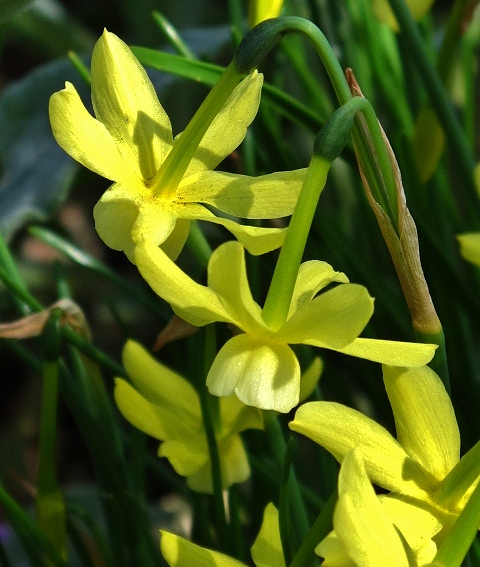
Narcissus jonquilla April 2012

Paeonia mascula April 2012

Rhododendron campylogynum 'Celsum' April 2012

Tulipa 'Little Princess' April 2012

April 2012 was a normal month.  The mean temperature was 50.8F/10.4C.  The normal mean temperature is 50.3F/10.2C.  The highest temperature was 74F/23.3C, the lowest was 35F/1.7C.  Total precipitation was 2.68 inches.  Normal precipitation is 2.71 inches.   There was 1 day with heavy rain, 7 days with rain, 21 days with light rain, 1 day with hail, 15 days with fog, 2 days with haze, 21 cloudy days, 8 partly cloudy days & 1 fair day.

Friday, April 27, 2012

Victor Steinbrueck Park

Victor Steinbrueck Park April 2011

Victor Steinbrueck Park April 2011

Victor Steinbrueck Park April 2011

Pike Place Market & Downtown Seattle from Victor Steinbrueck Park April 2011

Victor Steinbrueck Park April 2011

Victor Steinbrueck Park, Alaskan Way Viaduct April 2011

Victor Steinbrueck Park isn't a very large park.  But there are very few parks in Downtown Seattle.  This is the only park in the Pike Place Market.  Here you can hang out with market regulars &, during the summer, hordes of tourists, especially when the cruise ships are in town.  There are places to sit at tables in the sun, which you might find in summer.  There are also sheltered benches, if you encounter rain.  There are excellent views of the market, Downtown Seattle, Elliott Bay & Puget Sound.  On a clear day, the Olympic Mountains are stunning.  Let me warn you that an easy way to annoy a native Seattleite is to ask for directions to Pike's Market.  While we've all heard this said, we are often inclined to answer that there is no such place.  The Pike Place Market is named for Pike Place (an extension of Pike Street) which runs through the market.  Pike Street was named for Seattle pioneer John Pike.  It bears no relation to Pike's Peak in Colorado.  But perhaps that peak is the source of confusion among tourists about the name of the market.

Victor Steinbrueck was a well-known advocate of historic preservation. A University of Washington alumnus & architecture professor, he opposed the city's redevelopment plans for the Pike Place Market & helped to establish the city's Pioneer Square Historical District during the 1960s. Steinbrueck's sketches of the market & other Seattle scenes appeared in his books Seattle Cityscape (1962) Market Sketchbook (1968) and Seattle Cityscape II (1973). Steinbrueck's work to save the Pike Place Market came in response to the city's plans to tear it down, along with other nearby structures. In response, Friends of the Market was formed in 1964, led by Steinbrueck. Their campaign resulted in a successful ballot initiative in 1971 which established a seven-acre Pike Place Market Historical District, saving it from demolition, & formed a commission to oversee it, on which Steinbrueck served.

Friday, April 13, 2012

March in Seattle

Ribes sanguineum March 2012

Hepatica americana March 2012

Pulmonaria longifolia 'Bertram Anderson' March 2012

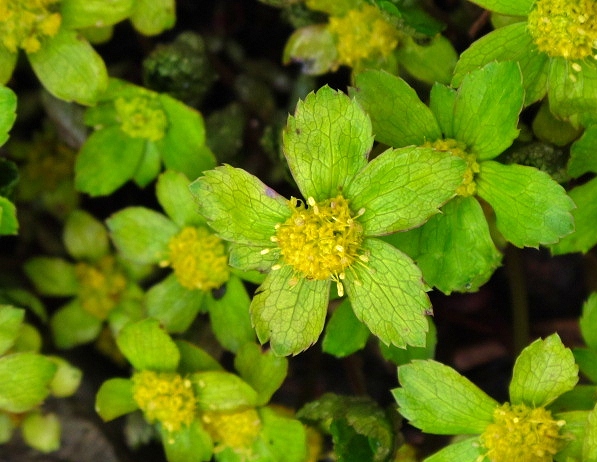
Hacquettia epipactis  March 2012

Helleborus lividus March 2012

March 2012 was colder & much wetter than normal.  The mean temperature was 43.1F/6.2C.  The normal mean temperature is 46.5F/8.1C.  The highest temperature was 60F/15.6C, the lowest 29F/-1.7C.  Total precipitation was 7.2 inches.  Normal precipitation is 3.72 inches.  There was 0.9 inch of snow.  There was 1 day with heavy rain, 9 days with rain, 24 days with light rain, 1 day with heavy snow, 2 days with snow, 4 days with light snow, 1 day with sleet, 19 days with fog, 23 cloudy days, 7 partly cloudy days & 1 fair day.

Tuesday, April 3, 2012

Xardín da Terraza Abandonada (Garden of the Abandoned Balcony)


 Xardín da Terraza Abandonada March 2012

I saw this abandoned apartment building in the Casco Vello de Vigo, Galiza.  Plants had spread from their pots to root on the floors of every balcony & into the many cracks of the facade to create a vertical garden of melancholy charm.  Although barely visible,  the containers were in place.  There are a number of abandoned buildings in the old city of Vigo.  But none other has been left in this condition.  I wonder what circumstances caused the residents to leave their potted plants behind.

Vin este edificio abandonado no Casco Vello de Vigo, Galiza. As plantas se espallou a partir dos seus vasos de enraizada nos pisos de cada terraza e nas moitas fendas do muro para crear un xardín vertical de encanto melancólico. Aínda que pouco visible, os vasos estaban no lugar. Hai unha serie de edificios abandonados na cidade vella de Vigo. Pero ningún outro se deixou nesta condición. Eu me pregunta o que fixo que as circunstancias os veciños a deixar os seus vasos de plantas para tras.

The second paragraph is a translation into Galego (Galician), an official language of Galiza (Galicia), along with Castellano (Spanish), and the first language of  local government.  There are 3 million speakers of Galego.