Friday, March 11, 2011

Narcissus in the Cascadia Garden

Narcissus 'Tete-a-Tete' February 2010

Narcissus 'Mite' February 2010

Narcissus 'W P Milner'  February 2010

 Narcissus poeticus 'Actaea' March 2010

 Narcissus 'Itzim' March 2010

 Narcissus pseudonarcissus 'Princeps' March 2010

  Narcissus 'Seagull' March 2010

Narcissus are some of my favorite plants in the Cascadia Garden in Seattle.  Narcissus is the birth-month flower for March, the month when I was born.  I can't remember a birthday when I didn't receive a bunch of Narcissus.  I'm very attracted to the very common Narcissus 'King Alfred'.  But I really love them all.  I'm particularly fond of the miniatures, which bloom earliest, often toward the end of February.  I've included the bloom times for Narcissus in my garden, below.  Narcissus have been grown for millennia.  They appeared in the gardens of ancient Rome.  Most are native to the Mediterranean Basin, many in Iberia & Morocco.  Narcissus serotinus is a fall-flowering species which grows as far east as Israel.  Narcissus pseudonarcissus, the Daffodil, grows as far north as England.  The native range of Narcissus jonquilla, the Jonquil, is limited to the Iberian Peninsula.  There are perhaps 45 species of Narcissus divided into 10 groups, the largest of which is the Pseudonarcissi.  Most garden varieties are derived from Narcissus cyclamineus, Narcissus jonquilla, Narcissus poeticus, Narcissus pseudonarcissus, Narcissus tazetta & Narcissus triandrus.  Species, hybrids & cultivars are divided into 13 horticultural divisions.  A good source for Narcissus is John Scheepers, Inc.  Heirloom Narcissus can be found at Old House Gardens.

Narcissus in the Cascadia Garden:
Narcissus ‘Beersheba’ derived from Narcissus pseudonarcissus, introduced in 1923.  Bloom times: 3-01-10, 3-25-09, 3-16-08
Narcissus bulbocodium ‘Golden Bells’ Bloom times: 3-27-08, but not since.
Narcissus ‘Hawera’ derived from Narcissus triandrus & Narcissus jonquilla, introduced in 1928  Bloom times: 3-27-10
Narcissus ‘Itzim’ derived from Narcissus cyclamineus, introduced in 1982  Bloom times: 2-27-10, 3-17-09, 3-3-08
Narcissus ‘Jenny' derived from Narcissus cyclamineus but said to be a hybrid, introduced in 1943.  Bloom times: 2-27-10, 3-25-09
Narcissus jonquilla 'Baby Moon'  Bloom times: 3-13-08
Narcissus ‘King Alfred’ derived from Narcissus pseudonarcissus ssp. major, introduced in 1890.  Bloom times: 2-27-10, 3-25-09, 3-3-08
Narcissus ‘Little Gem’ introduced in 1938.  Bloom times: 3-13-09
Narcissus minor var. conspicuus  Bloom times: 3-25-09, 3-3-08
Narcissus ‘Mite’ derived from Narcissus pseudonarcissus ssp. obvallaris & Narcissus cyclamineus, introduced in 1965.  Bloom times: 2-14-10, 3-3-09
Narcissus nanus ‘Little Beauty’ introduced in 1965.
Narcissus x odorus a naturally occurring hybrid of Narcissus jonquilla & Narcissus pseudonarcissus.  Bloom times: 3-03-10
Narcissus poeticus ‘Actaea’ introduced in 1927.  Bloom times: 3-05-10, 4-04-09, 3-27-08
Narcissus pseudonarcissus ‘Princeps’ introduced in 1830.  Bloom times: 3-12-10, 3-13-08
Narcissus ‘Seagull’ derived from Narcissus poeticus, introduced in 1893.  Bloom times: 3-14-10, 4-06-09
Narcissus ‘Small Talk’ derived from Narcissus minor, introduced in 1965.  Bloom times: 2-07-10, 3-2-09, 2-22-08
Narcissus ‘Tete-a-Tete’ derived from Narcissus cyclamineus & Narcissus tazetta, introduced in 1949.  Bloom times: 2-07-10, 2-27-09, 2-28-08
Narcissus triandrus ‘Ice Wings’ introduced in 1958.  Bloom times: 3-16-10, 4-04-09, 3-27-08
Narcissus ‘W P Milner’ derived from Narcissus pseudonarcissus ssp. moschatus, introduced in 1884.  Bloom times: 2-11-10, 3-5-09, 2-28-08

Friday, March 4, 2011

February Garden Pictures & Bloom Times

 Erica x darleyensis 'Mary Ellen' February 2011
 
Euphorbia rigida & Yucca filimentosa 'Bright Edge' February 2011

Helleborus lividus February 2011

Helleborus x sternii February 2011

 Tulipa turkestanica & Sedum palmeri February 2011

Below is a list of plants that began to bloom in my garden in Seattle in February 2011. I recorded the date when the 1st flower opened, not when they were in bud. I think this information is helpful in planning your garden. If you have nothing that blooms in February, you can find plants from this list.  Nurseries in Seattle usually sell them when they are in bloom. I have included dates from previous years. Weather conditions probably account for most of the difference in bloom times.  The weather in February 2010 was very different from the weather this year.  It was exceptionally warm.  Many plants bloomed in February that normally bloom in March.  February 2011 started out fairly warm, then became colder, then very cold after a snowfall on the 24th, when temperatures at night were well below freezing.

02-02-11  Crocus sieberi ‘Firefly’  2-06-10, 2-20-09, 2-20-08
02-02-11  Helleborus argutifolius  1-31-10, 2-14-09, 02-10-08
02-02-11  Mahonia mairei  1-20-10, 2-14-09, 1-29-08
02-07-11  Helleborus x sternii  2-04-10, 2-05-09, 2-20-08
02-13-11  Crocus tommasinianus  2-11-10, 2-19-09, 2-20-08
02-17-11  Narcissus ‘Tete-a-Tete’  2-07-10, 2-27-09, 2-28-08
02-24-11  Helleborus lividus  2-14-10, 2-20-08
02-25-11  Azara microphylla

Friday, February 25, 2011

Why a Theme Garden?

Prairie Garden

Red & Yellow Garden

 Chinese Garden

Why a Theme Garden? You may wonder whether a garden really needs a theme.  It’s hard for me to believe that any garden doesn’t have a theme, though it may be as simple as: Plants People Gave Me.  Plants I Like is always a good theme.  But what if you’re not sure which plants you really like?  Or perhaps you like so many plants, that you don’t know where to begin.  This is where a designated theme simplifies your garden planning.  Now you can research plants that fit your theme.  Or you can choose among the plants you already know that suit your theme.  Choose a theme that works with your site.  If your site is moist & shaded, don’t choose a dryland theme, choose a theme of plants from woodland regions.  Color is often used as a theme.  Pink flowers is an easy theme, there are many of them.  Gray is a good theme for a dry, sunny site.  Many plants adapted to dry sun have gray foliage.  Gray & blue together can achieve a theme of tranquility.  Plants with large leaves suggest a tropical theme.  A theme may also be plants from a geographic region.  Pacific Northwest native plants is a popular theme in parks & public gardens in Seattle.  When you travel to Italy, you may return with the desire for a garden of Mediterranean plants, or a formal Italian garden.  There are many attempts at Japanese gardens in Seattle back yards.  Themes may also correspond to seasons, such as a theme of winter-blooming plants, or plants with colorful fall foliage.  Not every plant in your garden needs to be in step with the theme.  Use plants that complement your theme, as well.

Friday, February 18, 2011

Dr. Sun Yat-Sen Classical Chinese Garden

 Outside the 1. China Maple Hall.  Numbers correspond to the map below.

2. China Maple Hall Courtyard & moon gate in the 4. Double Corridor

Bridge between islands.  The pebbles used for paving were brought from China.

3. Ting.  'High on a pile of weathered rocks, emulating a mountain, sits an elegant pavilion representing humans in their natural setting.'

stools

 6. Jade Water Pavilion.  'Pitted & convoluted Tai Hu limestone rocks from Lake Tai near Suzhou are highly prized.  The pine symbolizes strength because it can grow in treacherous conditions.'


 Two arrangements from inside the 8. Scholar's Study.

8. Scholar's Courtyard

On 11-25-10, Rusty & I drove from Seattle to snowy Vancouver, British Columbia.  On the following rainy day, we found remnant patches of snow in the Dr. Sun Yat-Sen Classical Chinese Garden.  I thought it was stunning.  Rusty likes plants, but isn't a great garden enthusiast.  He said, 'This doesn't look like a garden.  There are so few plants.'  I replied, 'Gardens can be about pavement & structures.  Ask any landscape architect.'  The classical Chinese scholar's garden consists of 4 main elements & represents the Daoist philosophy of yin & yang.  1. Architecture is Ming dynasty classical design.  A main hall is a tang (yin).  A pavilion or gazebo is a ting (yang).  2. Rocks reflect rugged landscapes.  3. Plants are selected for symbolic value: willow for feminine grace, winter-flowering plum for renewal, pine for strength, bamboo for quiet resilience.  4. Water creates a tranquil atmosphere.  The garden was constructed by a 52-member team of experts from Suzhou.  It opened in 1986.
 
Map of the Dr. Sun Yat-Sen Classical Chinese Garden

Friday, February 11, 2011

Shrubs for Shade

Pieris japonica 'Bisbee Dwarf' July 2010

Chamaecyparis lawsoniana 'Somerset' December 2008

Hypericum androsaemum 'Albury Purple' September 2010

Ribes x gordonianum March 2010

Hydrangea quercifolia September 2008

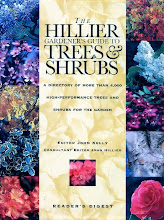
Here are shade-tolerant & shade-loving shrubs selected for beauty, utility & availability in Seattle, the Pacific Northwest & other areas in USDA zone 8.  Most do better in light shade than deep shade.  Camellia, Rhododendron & Pieris benefit from afternoon shade.  I’ve had success with Chamaecyparis obtusa (Hinoki Cypress) & Chamaecyparis lawsoniana (Port Orford Cedar) in light shade.  Mahonia, Sarcococca & Vaccinium ovatum (Evergreen Huckleberry) do fairly well in deep shade.  Give Mahonia bealei plenty of shade, other Mahonia tolerate more sun.  Arbutus unedo ‘Compacta’ (Compact Strawberry Tree) Gaultheria shallon (Salal) & Ribes sanguineum (Flowering Currant) are good for dry shade.  Enkianthus, Fuchsia & Sarcococca should not be allowed to dry out in summer.  More shade requires less water.  Most of these should be fairly easy to find.  When local nurseries fail, try mail-order nurseries.  Forest Farm is a good source for uncommon plants.  This list is not meant to provide detailed information on shrubs, but to introduce you to some you may not know, or remind you of those you have forgotten.  Be sure you know how large these shrubs grow before you plant them.  Many shrubs do not look good when sheared or heavily pruned.  An abundance of detailed information is available on the web.  Good reference books on shrubs are The Hillier Gardener's Guide to Trees & Shrubs edited by John Kelly, Shrubs by Roger Phillips & Martyn Rix, Sunset Western Garden Book.

Abelia x grandiflora: for part shade, flowering evergreen
Arbutus unedo ‘Compacta’ (Compact Strawberry Tree): evergreen with flowers & fruit in fall
Aucuba japonica: colorful evergreen foliage
Buxus microphylla (Japanese Boxwood) Buxus sempervirens (Common Boxwood): evergreen, often used for hedges & topiary
Calycanthus floridus (Carolina Allspice) Calycanthus occidentalis (Spice Bush): needs moisture, fragrant
Chamaecyparis lawsoniana ‘Ellwoodii’ (Dwarf Port Orford Cedar): & other cultivars, Chamaecyparis obtusa ‘Nana Gracilis’, Chamaecyparis obtusa ‘Nana Lutea’ (Dwarf Hinoki Cypress): & other cultivars (note: while these tolerate dry shade, they are probably better with moisture in sun)
Choisya ternata 'Aztec Pearl', Choisya ternata 'Sundance' (Mexican Orange): for part or light shade, tolerates some dryness, fragrant bloom, evergreen
Clethra alnifolia (Summersweet) Clethra barbinervis (Japanese Sweet Shrub) Clethra delavayi, Clethra fargesii: all need moisture, fragrant bloom, fall color
Corylopsis glabrescens: large shrub, Corylopsis pauciflora, Corylopsis sinensis: large shrub, Corylopsis spicata (Winter Hazel): all need moisture, good from, early bloom
Daphne x burkwoodii: for light shade, needs moisture, easier to grow than other Daphne
Disanthus cercidifolius: for light shade, needs moisture, excellent fall color
Enkianthus campanulatus, Enkianthus cernuus rubens, Enkianthus perulatus: all need moisture, showy bloom, good fall color
Euonymus japonicus: many cultivars, good foliage color
Fuchsia magellanica (Hardy Fuchsia): showy bloom, low temperatures can cause damage
Fatsia japonica: large shrub, evergreen
Fothergilla gardenii, Fothergilla major: both need moisture, with fragrant flowers & colorful fall foliage
Gaultheria shallon (Salal): tolerates dryness, spreads widely by stolons, edible fruit
Hamamelis vernalis (Ozark Witch Hazel): fragrant flowers, colorful fall foliage
Holodiscus discolor (Oceanspray): for part shade, tolerates dryness, showy bloom Hydrangea aspera, Hydrangea quercifolia (Oakleaf Hydrangea): for light shade, tolerates dryness, showy bloom
Hypericum androsaemum (St John’s Wort): some cultivars with colorful foliage
Ilex cornuta (Chinese Holly): evergreen, Ilex crenata (Japanese Holly): evergreen, Ilex verticillata (Winterberry): needs moisture, colorful fall foliage & fruit
Illicium anisatum (Japanese Anise) Illicium floridanum (Florida Anise): evergreen, uncommon
Itea ilicifolia: showy bloom, evergreen, uncommon, large shrub, Itea virginica (Sweetspire): fragrant flowers, good fall color, uncommon
Kalmia latifolia (Mountain Laurel): needs moisture, showy bloom
Leucothoe axillaris, Leucothoe walteri: needs moisture, several cultivars with colorful foliage
Mahonia aquifolium (Oregon Grape): tolerates dryness, Mahonia bealei: needs moisture Mahonia repens: tolerates dryness
Myrica californica (California Wax Myrtle): tolerates dryness, large shrub, also grows in sun
Nandina domestica (Heavenly Bamboo): tolerates dryness, 'Plum Passion' has colorful foliage
Oemleria cerasiformis (Indian Plum): tolerates dryness, native plant
Physocarpus capitatus, Physocarpus opulifolius (Ninebark): tolerates dryness, for part shade
Pieris japonica (Lily of the Valley Shrub): tolerates dryness, showy fragrant bloom
Rhododendron: tolerate sun, but better in shade, very many species & cultivars
Ribes sanguineum (Flowering Currant) Ribes odoratum, Ribes x gordonianum: all tolerate dryness, better in light shade
Skimmia japonica: needs moisture, evergreen, female plants have red fruit
Sarcococca confusa, Sarcococca hookeriana, Sarcococca humilis, Sarcococca ruscifolia (Sweet Box): needs moisture, evergreen, very fragrant bloom
Symphoricarpos albus (Snowberry): tolerates dryness, white fruit
Taxus x media (Yew): for part shade, evergreen conifer
Thuja koraiensis (Korean Arborvitae) Thuja occidentalis ‘Hetz Midget’ (Dwarf Arborvitae): for part shade, evergreen conifer
Vaccinium ovatum (Evergreen Huckleberry): edible fruit
Viburnum davidii: for part shade, evergreen, blue fruit, Viburnum tinus ‘Spring Bouquet’: for part shade, showy bloom, evergreen

Friday, February 4, 2011

January Garden Pictures & Bloom Times

Cyclamen coum January 2011

Erica x darleyensis 'Goldrush' January 2011

Helleborus lividus January 2011

Paeonia suffruticosa 'Zi Er Giao'

 Primula x juliana 'Wanda' January 2010

Below is a list of plants that began to bloom in my garden in Seattle in January 2011. I recorded the date when the 1st flower opened, not when they were in bud. Not very many plants bloomed in my garden in January.  Nurseries in Seattle usually sell plants when they are in bloom. I have included dates from previous years. Weather conditions probably account for most of the difference in bloom times.

01-05-11  Veronica pectinata 3-05-10, 4-06-09, 3-30-08
01-21-11  Primula elatior 2-25-10, 3-2-09
01-25-11  Euphorbia rigida 1-20-10, 2-12-09, 1-19-08
01-26-11  Hamamelis x intermedia ‘Pallida’ 1-20-10, 1-20-09
01-27-11  Iris ‘Katharine Hodgkin’ 1-25-10, 2-10-08
01-27-11  Mahonia aquifolium 1-28-10, 3-13-08
01-29-11  Helleborus x hybridus 1-15-10, 1-17-09, 1-26-08

Friday, January 28, 2011

Winter Flowers

Iris 'Katherine Hodgkin' January 2010

Erica australis February 2009

Hamamelis x intermedia 'Pallida' February 2009

Hepatica americana February 2010

Pieris japonica February 2010

Camellia japonica March 2010

 Chionodoxa luciliae March 2010

There is not a huge number of plants that bloom in winter in Seattle.  But it is a real treat to walk in the garden on a sunny winter day & find plants in bloom.  Winter blossoms are often fragrant.  The sweet scent of Hamamelis x intermedia (Witch Hazel) fills the air with enchantment.  Many Mahonia bloom early in the year.  Some of the earliest are listed below.  Camellia sasanqua ‘Yuletide’ can bloom before the winter solstice, other selections bloom later in winter.  Early-flowering Camellia japonica also bloom in winter, but fully double flowers can rot in winter rain.  1 of the earliest perennials to bloom in Seattle gardens is Euphorbia rigida in January.  It is followed a few weeks later by Euphorbia myrsinites.  A stunning combination of purple & yellow flowers is Crocus sieberi ‘Firefly’ & Narcissus ‘Tete-a-Tete’ in February.  

Visit the Witt Winter Garden at the Washington Park Arboretum in Seattle for color & fragrance on a sunny winter day.  I’ve gathered these names from sources including the Cascadia Garden, the plant list for the Witt Winter Garden, Bulbs by Roger Phillips & Martyn Rix, Perennials by Roger Phillips & Martyn Rix, Shrubs by Roger Phillips & Martyn Rix.  These encyclopedic books by Roger Phillips & Martyn Rix have are ordered by bloom time rather than alphabet, making it easy to find flowers for every season.  During very cold winters, some of these plants may be pushed toward spring bloom.  Many spring-flowering plants bloomed during the very warm winter of 2010.

Winter Flower Plant List
Trees
Cornus mas (Cornelian Cherry)
Corylus maxima 'Atropurpurea Superba'
Hamamelis x intermedia, Hamamelis japonica, Hamamelis mollis (Witch Hazel)
Prunus mume (Japanese Apricot) Prunus subhirtella ‘Autumnalis’ (Winter Cherry)

Shrubs
Abeliophyllum distichum (White Forsythia)
Camellia japonica ‘Elegans’ & others, Camellia sasanqua ‘Yuletide’ & others
Chimonanthus praecox (Wintersweet)
Corylopsis glabrescens, Corylopsis pauciflora, Corylopsis sinensis, Corylopsis spicata (Winter Hazel)
Corylus avellana ‘Contorta’ (Hazel)
Daphne mezereum
Edgeworthia chrysantha
Erica australis, Erica carnea, Erica x darleyensis
Forsythia giraldiana, Forsythia ovata
Garrya x issaquahensis (Silktassel)
Jasminum nudiflorum (Winter Jasmine)
Lonicera standishii
Mahonia ‘Arthur Menzies’, Mahonia aquifolium (Oregon Grape) Mahonia bealei, Mahonia mairei, Mahonia repens
Pieris japonica
Rhododendron ‘Christmas Cheer’, Rhododendron cyanocarpum, Rhododendron barbatum, Rhododendron dauricum ‘Midwinter’, Rhododendron lutescens, Rhododendron moupinense, Rhododendron mucronulatum 'Cornell Pink', Rhododendron ririei, Rhododendron strigillosum
Ribes laurifolium, Ribes sanguineum
Rosmarinus officinalis (Rosemary)
Sarcococca confusa, Sarcococca hookeriana, Sarcococca humilis, Sarcococca ruscifolia
Viburnum x bodnantense, Viburnum farreri, Viburnum tinus

Perennials
Corydalis cava
Crocus sieberi ‘Firefly’, Crocus tommasinianus, Crocus vernus
Cyclamen coum
Euphorbia myrsinites, Euphorbia rigida
Chionodoxa luciliae (Glory of the Snow)
Eranthis cilicica, Eranthis hyemalis (Winter Aconite)
Erythronium dens-canis (Dog-tooth Violet)
Galanthus (Snowdrops)
Hacquetia epipactis
Helleborus foetidus, Helleborus lividus, Helleborus x hybridus, Helleborus niger, Helleborus x sternii (Hellebore)
Hepatica americana (Liverwort)
Iris histrioides, Iris ‘Katharine Hodgkin’, Iris reticulata
Leucojum vernum (Spring Snowflake)
Narcissus ‘Little Gem’, Narcissus ‘Rijnveld’s Early Sensation’, Narcissus ‘Small Talk’, Narcissus ‘Tete-a-Tete’, Narcissus ‘WP Milner’ (Daffodil)
Primula elatior, Primula x juliana, Primula vulgaris (Primrose)
Trillium ovatum (Wake Robin)
Tulipa turkestanica (Tulip)

Friday, January 21, 2011

Tukwila Pond Park

Tukwila Pond October 2010

Arbutus menziesii bark at Tukwila Pond Park October 2010

Arbutus menziesii fruit at Tukwila Pond Park October 2010

Pseudotsuga menziesii cone at Tukwila Pond Park October 2010

Rosa gymnocarpa hip at Tukwila Pond Park October 2010

Tukwila Pond October 2010 

 Tukwila Pond October 2010


I found Tukwila Pond Park on the web.  I don’t know how that happened, because there is very little information about it there.  However, I learned that the pond was behind the Target store, just across from Westfield Southcenter shopping mall.  After that, I saw the sign every time I drove on Strander Blvd.  I would tell myself that one day I would stop.  Years passed as I imagined a tiny pothole lined with cattails.  When I finally visited the pond in October of 2010, I was amazed.  Tukwila Pond is huge.  The park covers 25 acres.  The pond is lined with cottonwood trees (Populus balsamifera ssp. trichocarpa) so that very few of the surrounding retail & industiral buildings are visible.  2 spacious viewing platforms extend into the pond.  There is enough land on the western shore for a pavilion with restrooms, shelter & information about the park.  Picnic tables are spread thoughout the area.  The very brief description at the City of Tukwila website says that the park was financed & organized by volunteers.  This strengthens my feeling that the Tukwila Pond is the step-child of the Tukwila parks system.  The path from Strander Blvd has been covered by the edge of an asphalt parking lot.  No parking is provided. (You can park in the Target lot.)  An attempt was made to plant native species.  But these are mixed with a hodgepodge of uninspired, older plantings.  Even so, the pond is an amazing & beautiful work of nature.  It formed in a low-lying area when water began to run off from the hard surfaces of buildings, streets & parking lots that replaced farmland starting in the 1950s.

Friday, January 7, 2011

December Garden Pictures & Bloom Times

Collards December 2010

Corylus avellana 'Contorta' December 2010

Crows, clouds, Cascades December 2010

Helleborus argutifolius December 2010

Pieris japonica 'Variegata' December 2010

Very little began to bloom in my garden in December.  I included dates from previous years.  If you have plants that bloom in December in Seattle, please let me know.  December was wetter & warmer than usual, although the last few days were below freezing at night with frost on the ground throughout the day.  Leaf & flower buds began to form on many plants.  New shoots of Helleborus x hybridus grew to 3 inches.  Flower buds of Helleborus argutifolius & Helleborus x sternii were the size of my thumb.  Flower buds of Magnolia stellata were fuzzy gray olives.  Sedum 'Matrona', 'Brilliant' & 'Autumn Joy' were delicate, gray rosettes densely clustered on the ground.  Hemerocallis foliage emerged.  Still-very-solid catkins of Corylus avellana 'Contorta' began to droop from twisted branches.  

December Bloom Times
12-22-10  Erica x darleyensis 'Mary Ellen' 1-18-10, 12-05-08
12-27-10  Cyclamen coum 1-06-10, 12-05-08, 1-01-08
12-28-10  Primula x juliana ‘Wanda’ 1-28-10, 2-14-09